HaulOnce
Measure it. Order it right. Haul it once.
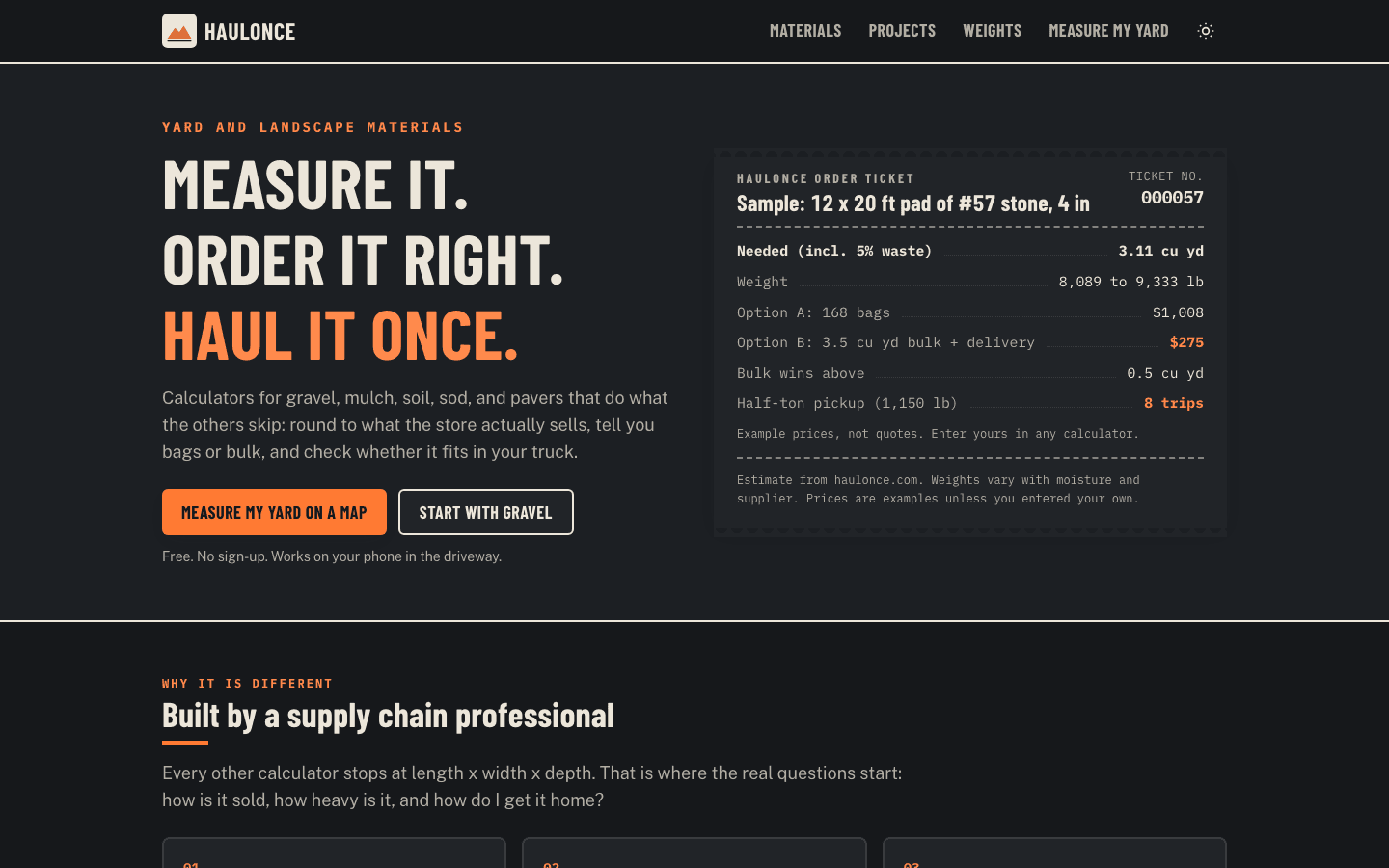
Yard and building material calculators that go past length × width × depth, plus an AI project helper. They round to how products are actually sold, compare bags against bulk delivery, and check whether the load fits in your truck.
- Role
- Solo: product, design, build, launch
- Stack
- Next.js · React · Claude API · AI SDK · Maps · Vercel
- material calculators
- 25
- project planners
- 14
The problem
Every gravel or mulch calculator stops at cubic yards. The questions that actually cost DIYers money come next. How is it sold? Is bulk cheaper than bags? Will it fit in my pickup, or will I make eight trips?
What I built
AI project helper
Describe a project in plain English, like "gravel pad for my shed, about 10 by 12", and Claude reads it, then calls the site's own tested calculators as tools. The AI never does the math: every quantity, weight, and trip count comes from the same code as the calculator pages, shown as an order ticket that opens the matching calculator already filled in.
Measure the yard on a satellite map
Trace a garden bed, lawn, or driveway on a satellite map and get the square footage without a tape measure.
Order tickets
Quantities round up to what stores actually sell (bags, scoops, pallets), with waste and compaction included.
Bags vs. bulk break-even
Shows the exact volume where bulk delivery becomes cheaper than bags, using the user's own local prices.
Haul Check
Compares the material's weight with the vehicle's payload to estimate the number of trips. A 3.11 cu yd load of stone means 8 trips in a half-ton pickup.
Under the hood
- Turned real ordering rules into code: material densities, compaction, waste, and the units each product is sold in.
- Uses the visitor's ZIP code to look up their USDA hardiness zone (2023, via PRISM) and GeoNames data, which drives grass and timing advice.
- Bills of materials for whole projects such as driveways, patios, decks, fences, retaining walls, and lawns.
- The AI helper is tested like the rest of the code: unit tests prove each tool returns exactly what the calculator pages show, and an eval set of real questions checks that the model picks the right tool and never states a number the tools did not produce. Rate limits and a prepaid spending cap keep its cost predictable (about a third of a cent per question).
- Built for phones, with light and dark themes, because people measure their yard standing in the driveway.
What it shows
- Adding AI to a live product, with guardrails
- Turning complex domain rules into code
- Interactive maps and geo data
- Mobile-first product design
Next project
Supply Chain Calculator
Professional tools platform
Contact
Hiring for a remote, AI-first team? Let's talk.
I'm currently open to part-time and contract remote roles. Tell me what you're building and I'll get back to you within a day.